2026 has entered its second half.
Looking back at the first half of the year, the global semiconductor industry continued to evolve under the strong momentum of AI demand. The rapid expansion of AI servers fueled growth in high-performance computing, HBM became a strategic focus in the memory market, investment in advanced packaging accelerated, and global semiconductor supply chains continued to undergo significant restructuring.
However, a deeper look reveals that the significance of this period goes beyond industry recovery. More importantly, the fundamental logic of semiconductor competition is undergoing a profound transformation.
In the past, semiconductor competition was primarily driven by advanced process technologies, manufacturing capabilities, and cost efficiency. In the AI era, however, the value of semiconductors is expanding beyond individual manufacturing processes toward a broader ecosystem encompassing computing, memory, packaging, supply chain capabilities, and industry collaboration.
The industry is shifting from “building more advanced chips” to “developing a more comprehensive semiconductor ecosystem.” The first half of 2026 is becoming a critical milestone as the semiconductor industry enters a new phase of development.
1. AI Demand Expands Across the Ecosystem: Semiconductor Competition Extends Beyond GPUs
Over the past few years, the artificial intelligence boom initially drove rapid growth in demand for high-performance computing chips, with GPUs becoming a core component of AI infrastructure.
However, by 2026, the value generated by AI is spreading across the entire semiconductor ecosystem. Growth opportunities are no longer concentrated solely around computing chips, but are expanding into memory, advanced packaging, interconnect technologies, power management, and semiconductor manufacturing.
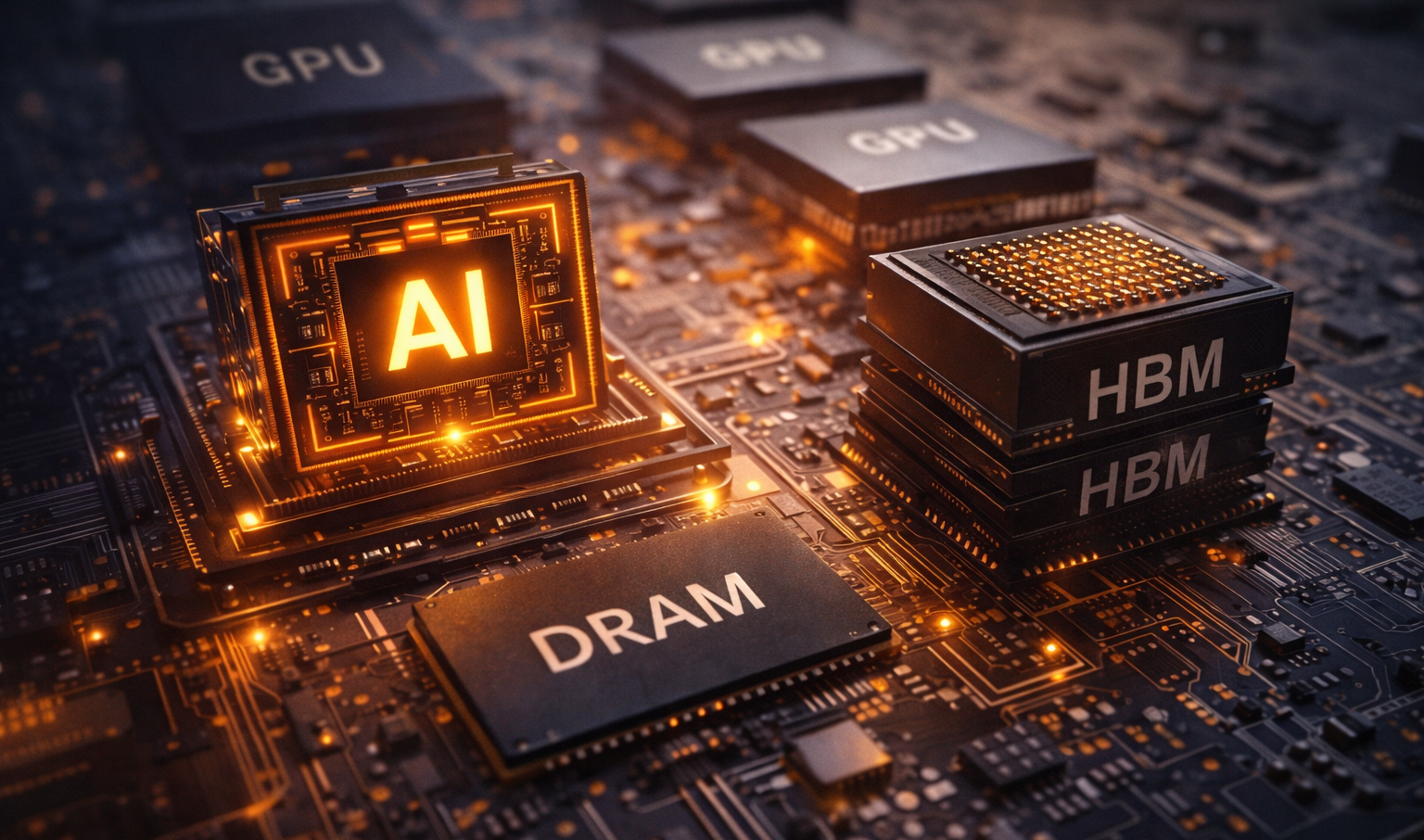
The reason is that AI servers are not powered by a single chip, but by a highly integrated computing system. Beyond high-performance processors, AI infrastructure also requires HBM, advanced packaging technologies, high-speed interconnects, power management solutions, semiconductor equipment, and materials to work together.
During the first half of this year, as AI infrastructure deployment continued to accelerate, multiple segments across the semiconductor value chain experienced new growth opportunities.
In the high-end memory sector, demand for HBM continued to rise, driving major memory manufacturers to expand related production capacity. In advanced packaging, technologies such as CoWoS gained increasing attention as demand for AI chip packaging grew rapidly. Meanwhile, semiconductor equipment, materials, and power management components also benefited from continued investment in AI data centers.
This indicates that the AI growth cycle is no longer simply a “GPU cycle.” Instead, it has evolved into a broader semiconductor ecosystem cycle covering chip design, manufacturing, memory, packaging, equipment, and materials.
2. Memory Market Undergoing a Value Reassessment: AI Driving Structural Transformation
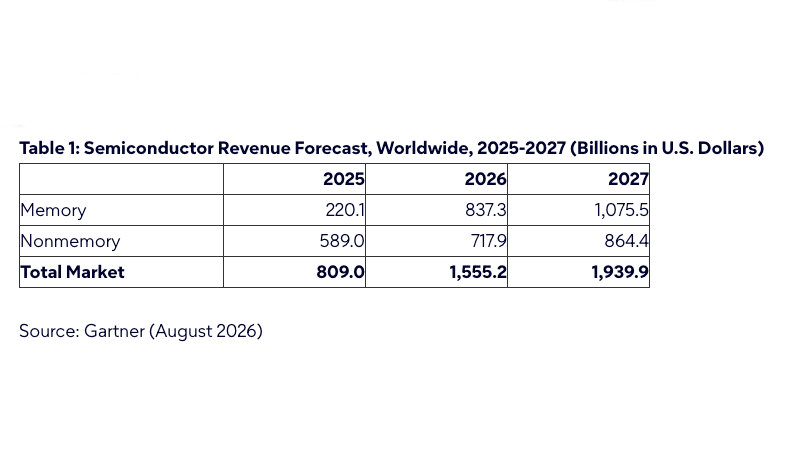
In the first half of 2026, the memory market became one of the most visible areas of transformation within the semiconductor industry.
Unlike previous memory cycles that were mainly driven by demand from PCs, smartphones, and other consumer electronics, the current market shift is primarily powered by the rapid expansion of AI infrastructure. AI servers, large-scale model training, and data center growth are reshaping the demand structure of the memory industry.
Following several years of inventory adjustments, the memory market began showing clear differentiation in 2026.
On one hand, demand for high-performance memory supporting AI computing continued to grow. On the other hand, as memory manufacturers adjusted their production strategies, supply pressure emerged in certain traditional memory products, leading to price increases.
Among these developments, HBM has become a critical factor influencing the future landscape of the memory industry. With the rapid growth of AI computing workloads, HBM has become an essential memory solution for AI servers due to its high bandwidth advantages. Leading memory manufacturers, including Samsung Electronics, SK hynix, and Micron, have continued expanding their HBM investments to support the growing demand from AI infrastructure.
However, the impact of HBM expansion extends beyond the high-end memory segment.
Because HBM production requires advanced DRAM manufacturing resources, memory suppliers have increasingly prioritized higher-value products, creating supply constraints for some conventional DRAM products. The price increases seen in certain DDR4 products during the first half of 2026 reflect this ongoing reallocation of semiconductor resources.
Compared with DRAM, NAND previously faced greater pressure due to weaker consumer electronics demand. However, driven by AI data center expansion, demand for enterprise SSDs and high-capacity storage solutions has gradually increased, pushing the NAND market toward data center and high-performance storage applications.
Overall, the memory industry is undergoing a significant value reassessment in 2026. Memory is no longer simply a supporting component within traditional semiconductor cycles; it is becoming a critical foundation of AI infrastructure.
3. Advanced Packaging Becomes a Critical Battleground in AI Chip Competition
As demand for AI servers and high-performance computing continues to grow, chips are facing increasing requirements for computing power, memory bandwidth, and data transfer efficiency.
However, as semiconductor processes continue to advance, the challenges and costs associated with improving performance through transistor scaling alone are increasing. As a result, the industry is exploring new approaches to achieve further performance improvements, making advanced packaging a key area of focus.
First, advanced packaging is enabling chips to overcome traditional process limitations and achieve system-level performance improvements.
By efficiently integrating computing chips, high-performance memory, and various functional modules, advanced packaging technologies can significantly enhance overall computing efficiency and meet the requirements of AI applications for higher performance and lower latency.
Second, advanced packaging is helping address the “memory wall” challenge in the AI era.
As AI models continue to grow in scale, the pressure on data transfer between computing units and memory is increasing. Simply improving computing capability is no longer sufficient. High-performance memory solutions such as HBM require advanced packaging technologies to achieve efficient integration with computing chips, further increasing the strategic importance of packaging.
In addition, advanced packaging is also transforming traditional chip design approaches.
Through multi-chip integration technologies, companies can combine computing, memory, and interface modules based on specific application requirements, improving product flexibility while reducing development costs and design risks.
In other words, competition in AI chips is expanding beyond wafer manufacturing capabilities toward packaging capacity, equipment, and material ecosystems.
Advanced packaging technologies represented by CoWoS have become major areas of industry investment, while packaging capacity is increasingly becoming a critical factor influencing AI chip supply capabilities.
4. Mature Process Nodes Enter a Phase of Structural Differentiation: Demand Dynamics Are Changing
Over the past several years, as advanced process technologies continued to advance, the market once expected semiconductor competition to increasingly focus on advanced nodes such as 3nm and 5nm, while mature processes would gradually lose importance.
However, market developments in 2026 demonstrate that mature processes have not become obsolete. Instead, they are entering a new stage characterized by stronger differentiation across application markets.
On one hand, automotive electronics, industrial control systems, renewable energy, AI infrastructure, and other sectors continue driving demand for mature process technologies.
Products such as PMICs, power devices, MCUs, analog semiconductors, and power management solutions may not rely on the most advanced process nodes, but they require high reliability, long-term supply stability, and consistent performance. As a result, demand remains resilient.
On the other hand, certain general-purpose mature-node products targeting traditional consumer electronics markets continue to face pressure from slower end-market recovery and intensified capacity competition.
Meanwhile, the growth of AI is further reshaping demand for mature processes.
Although AI processors primarily rely on advanced manufacturing nodes, AI server deployment also drives demand for supporting components such as power management ICs, interface chips, and power semiconductors — many of which are manufactured using mature process technologies.
Foundries are also continuously adjusting their capacity strategies. More resources are being allocated toward higher-value products and specialty process technologies, making mature-node capacity with automotive-grade, industrial-grade certifications, and long-term supply capabilities increasingly valuable.
Overall, mature processes are not entering a decline cycle. Instead, they are moving into a new phase of “demand differentiation and value reassessment” driven by AI infrastructure, electric vehicles, industrial automation, and high-reliability applications.
5. Global Semiconductor Supply Chains Continue to Restructure: Competition Enters the Era of Supply Chain Resilience
In the first half of 2026, global semiconductor supply chains continued to undergo significant transformation.
Unlike the previous globalization model that prioritized cost efficiency and manufacturing optimization, today’s semiconductor competition places greater emphasis on supply stability, manufacturing security, and supply chain resilience.
This shift is driven not only by the redistribution of capacity caused by emerging demand from AI and new energy applications, but also by broader changes in global industrial strategies.
On one hand, AI demand is reshaping global semiconductor capacity allocation.
As AI servers, high-performance computing, and data center infrastructure continue expanding, advanced manufacturing processes, HBM, and advanced packaging have become key investment priorities. Major semiconductor manufacturers and ecosystem players are increasing investment in these strategic areas.
At the same time, certain mature process capacities are being redirected toward higher-value applications such as automotive electronics, industrial control, and power management.
On the other hand, supply chain security has become a critical consideration in corporate strategy.
After experiencing multiple rounds of supply disruptions in recent years, companies have recognized the risks associated with relying on single sources of supply. As a result, the semiconductor industry is accelerating multi-regional supply chain development across wafer fabrication, packaging and testing, materials, and equipment sectors to enhance supply diversification and mitigate potential risks.
Meanwhile, the roles of different regions within the semiconductor ecosystem are also evolving.
The United States continues to strengthen its positioning in advanced manufacturing and AI-related semiconductor industries. Japan is leveraging its advantages in semiconductor materials and equipment. China is accelerating the development of domestic semiconductor capabilities, while Southeast Asian countries are attracting increasing opportunities in semiconductor packaging, testing, and electronics manufacturing.
The market developments during the first half of 2026 demonstrate that semiconductor competition is no longer only about technology and products — it is increasingly about ecosystem strength and supply chain capabilities.

6. Five Key Semiconductor Industry Trends for the Second Half of 2026
Looking back at the first half of 2026, the expansion of AI demand, structural changes in the memory market, the advancement of advanced packaging, and global supply chain transformation have collectively reshaped the competitive landscape of the semiconductor industry.
Entering the second half of the year, industry growth is expected to continue. However, market attention will gradually shift from “demand growth” toward “industry execution and value realization.”
Technological breakthroughs, capacity expansion, and supply chain capabilities will become critical factors influencing future industry development.
· AI Will Continue Driving Growth, While Competition Expands Across the Entire Semiconductor Ecosystem
AI will remain the primary growth engine for the semiconductor industry.
With continued expansion of data centers and high-performance computing demand, key areas including GPUs, HBM, advanced packaging, power management, and high-speed interconnect technologies will remain strategic focus areas.
However, market attention will gradually shift from the scale of AI investment toward whether AI demand can effectively translate into sustainable growth across the semiconductor value chain.
Future competition will no longer be limited to computing chips, but will extend across the broader ecosystem — including memory, manufacturing, packaging, semiconductor equipment, and materials.
· Memory Market Will Maintain Structural Differentiation, with High-End Demand Remaining Dominant
HBM, high-performance memory, and enterprise SSD solutions are expected to maintain strong market momentum.
However, driven by factors such as capacity allocation, supply structures, and end-market recovery, performance differences among various memory products will continue to widen.
The memory market may gradually transition from traditional cyclical fluctuations toward a more structural growth model driven by AI, high-performance computing, and data-intensive applications.
· Advanced Packaging Will Enter a New Phase of Capacity and Ecosystem Competition
As AI chip complexity continues to increase, the strategic importance of advanced packaging will become even more significant.
Technologies such as CoWoS, Chiplet architectures, and related packaging materials and equipment capacity will remain key areas of industry focus.
Future semiconductor competition will not only depend on manufacturing processes but also on packaging capabilities, memory integration, and system-level optimization.
· Mature Process Demand Will Continue to Diverge, with Specialty Applications Becoming Key Growth Drivers
Mature process technologies will continue to receive support from automotive electronics, industrial automation, renewable energy, and power management applications.
Rather than a broad-based recovery, the market will increasingly focus on structural opportunities, including automotive-grade MCUs, analog semiconductors, power management ICs, SiC, and GaN power devices.
The future competitive advantage of mature processes will shift away from simply expanding production capacity toward stronger product capabilities, supply reliability, and deeper application expertise.
· Supply Chain Capabilities Will Become a Core Competitive Advantage for Semiconductor Companies
With the continued growth of AI demand and evolving global industry dynamics, companies will place greater emphasis on supply stability, diversified sourcing, and risk management capabilities.
Future semiconductor competition will not only be a competition of technology and products, but also a competition of supply chain integration capabilities.
Companies with resilient supply networks, global resource coordination capabilities, and rapid response mechanisms will gain stronger competitive advantages.
7、Conclusion
The first half of 2026 marks a significant transformation period for the semiconductor industry.
AI is redefining industry demand. Advanced packaging is reshaping chip development strategies. Memory is entering a new phase of structural adjustment. Mature process technologies are gaining renewed opportunities in emerging applications. Meanwhile, global semiconductor supply chains continue to evolve.
Looking ahead to the second half of the year, the semiconductor industry will continue to present significant growth opportunities. However, the rules of competition have fundamentally changed.
Future leaders in the semiconductor ecosystem will require not only technological innovation, but also stronger capabilities in ecosystem integration, supply chain management, and operational resilience.
The semiconductor industry is moving beyond “chip-level competition” toward “ecosystem-level competition.”


Stay up to date with the latest in industry offers by subscribing us. Our newsletter is your key to receiving expert tips.